MOTION CAPTURE · AUGMENTED REALITY
Motion capture into AR
Two experiments in putting captured performance into a headset: pre-recorded motion on Apple Vision Pro, and a live optical-mocap stream into Meta Quest 3. I directed and performed the capture as well as building the pipeline.
Overview
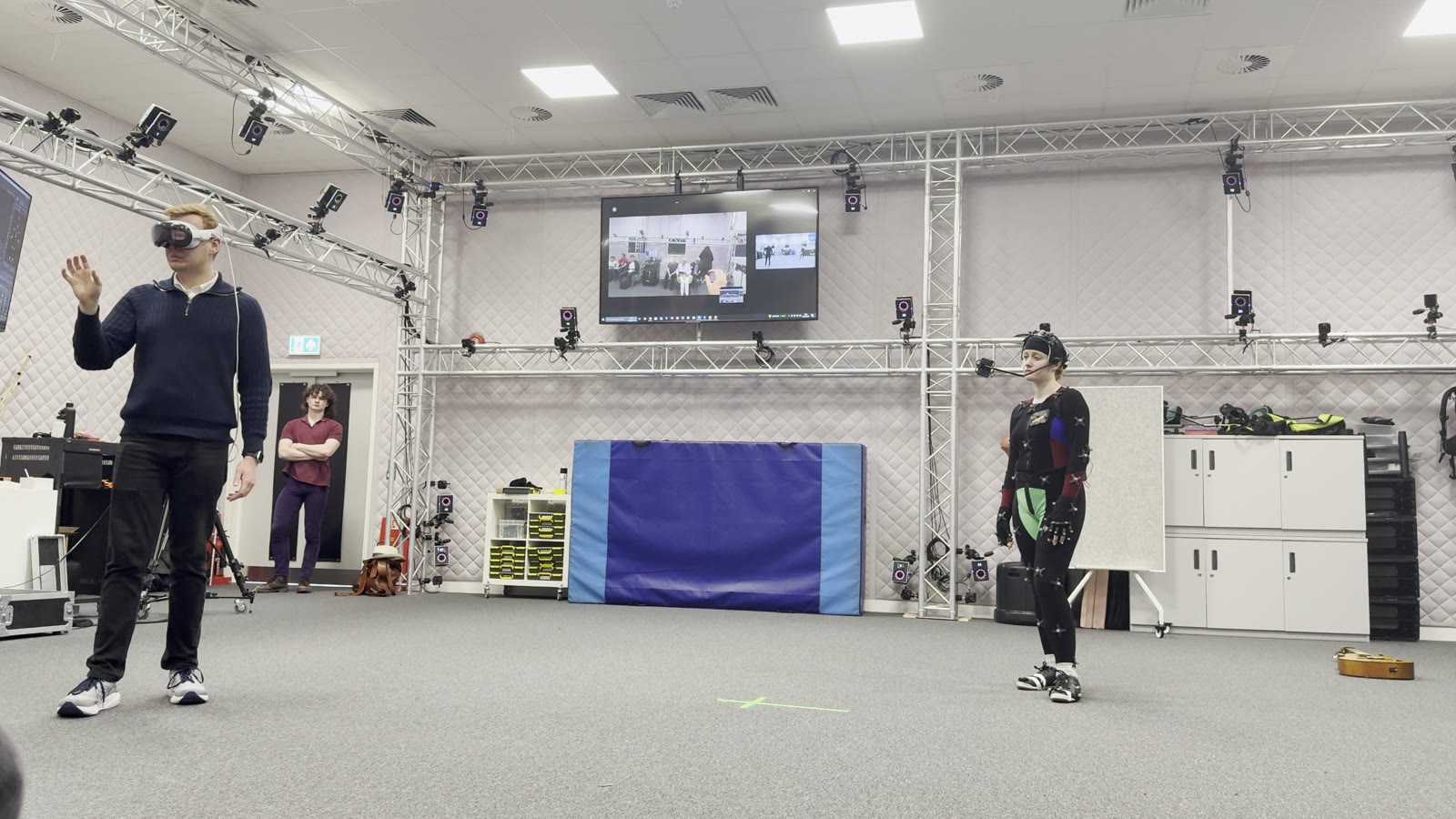
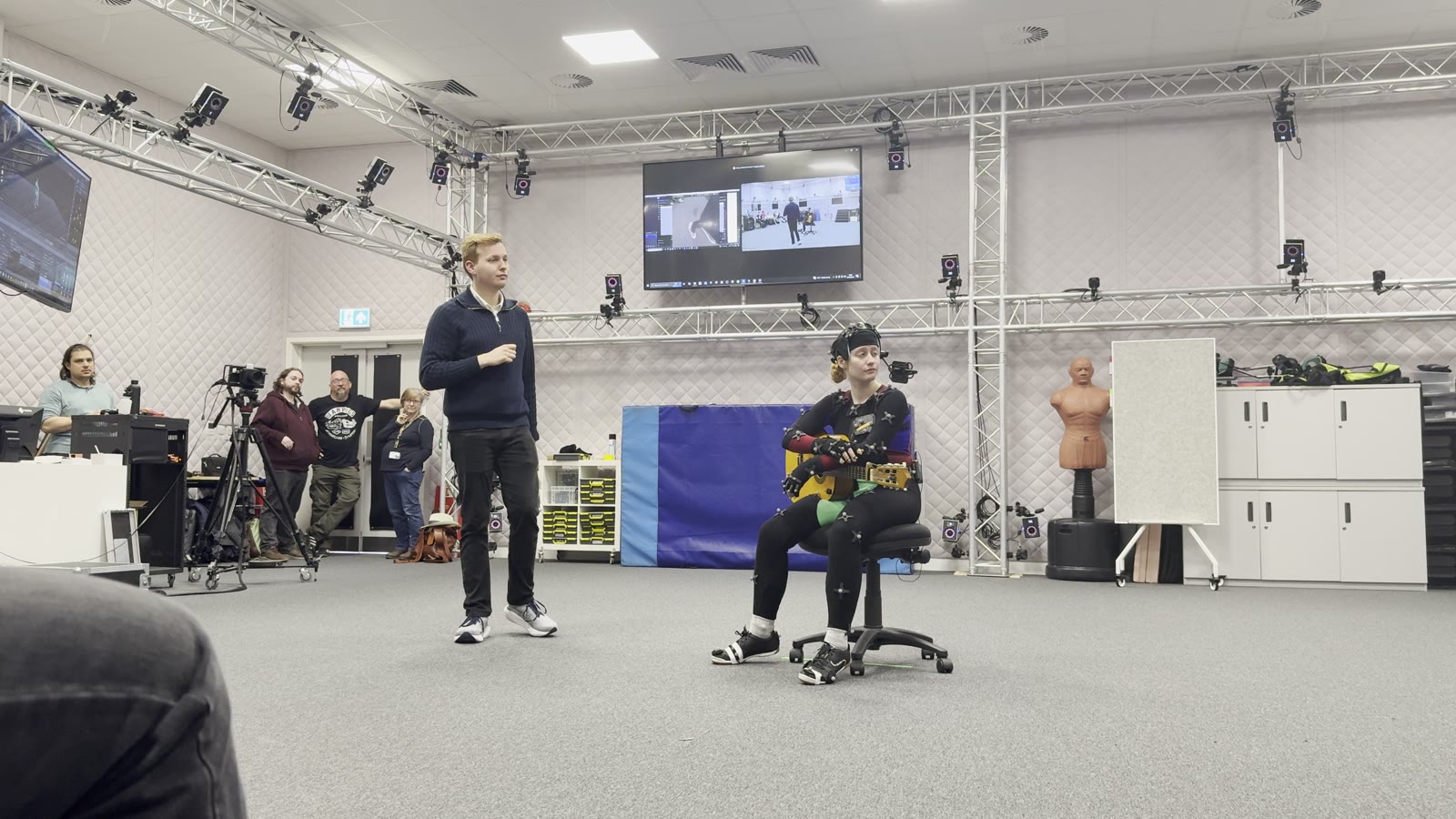
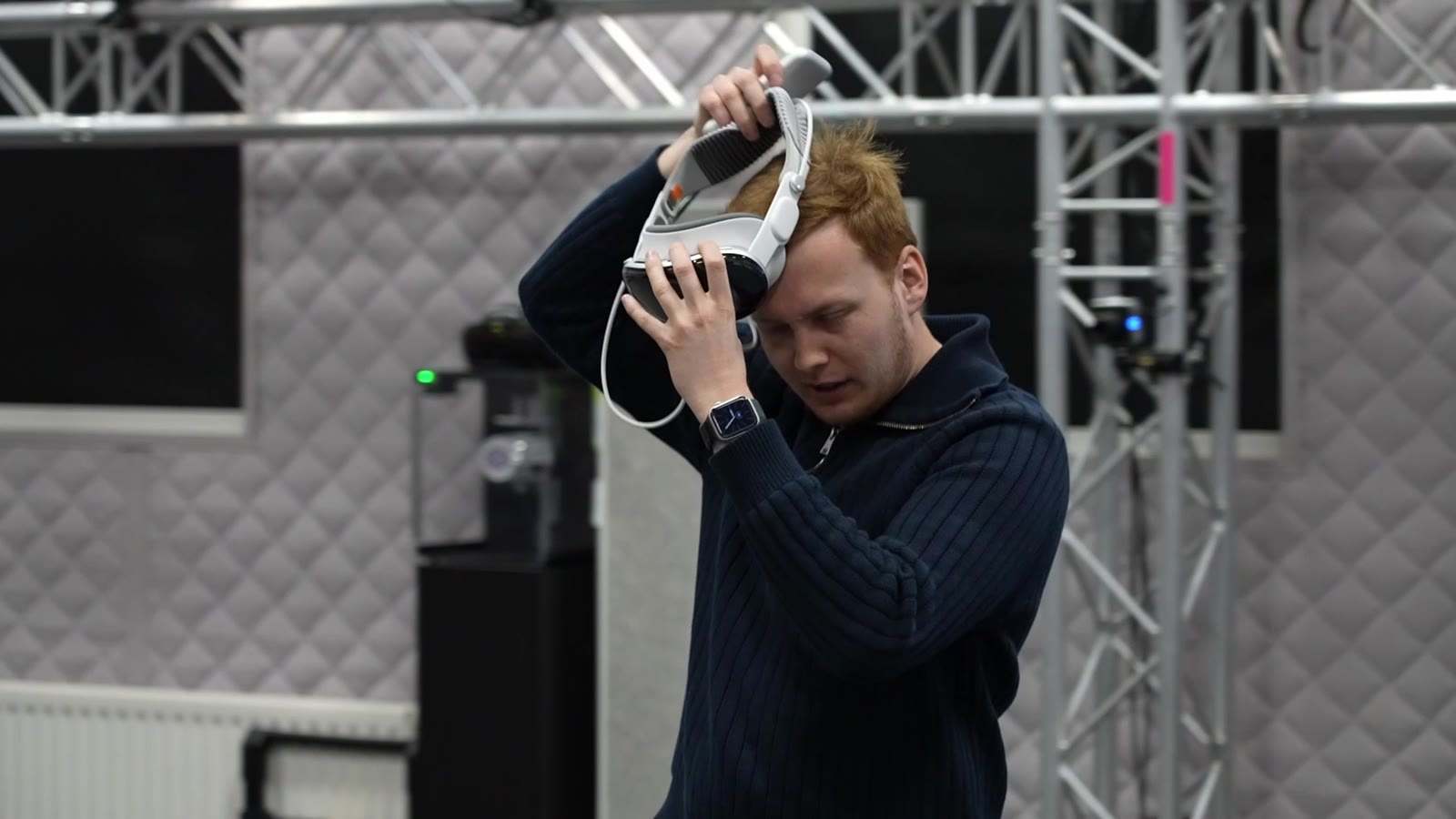
Working in the Centre for Creative and Immersive XR, I built this project in two halves. The first played pre-recorded motion capture onto a character viewed through Apple Vision Pro. The second took a live performer's movement from an optical mocap stage and drove a character that a co-located viewer could see in real time through Meta Quest 3.
It sits at the intersection of the things I work with most — mocap stages, virtual production, and headset interaction design — and it draws directly on a background most XR designers don't have: I both perform and direct on the volume, so I shape the capture as a piece of staging, not just data.
What I did
- Directed and performed the captured motion myself — blocking the action on the volume and shooting it as a scene.
- Operated capture on a Vicon Shogun optical system and cleaned the resulting data.
- Set up real-time previsualisation during capture using Autodesk MotionBuilder and Unreal Engine 5.
- Delivered the pre-recorded performance to Apple Vision Pro, and streamed the live skeleton into Meta Quest 3 so a co-located viewer sees the performance mapped into their own space.
- Tuned the live loop for low latency and legibility, the two things that make or break real-time mocap-to-AR.
Performance as design
Before games I trained and worked as an actor, and I bring that to the stage: knowing how to block a movement, hold an eyeline, and time a beat changes the quality of a capture before any cleanup happens. It's the same instinct a designer uses to stage a scene and read how a space performs for the person inside it — which is why I see motion capture and game design as the same craft viewed from two sides of the camera.
Selected views
// Swap in cleaner stills or a longer clip whenever you like — files live in assets/web/.